Category: Website Development Tools

  • Email Marketing Tools Comparison: Which Platform Actually Delivers Results?

    Email Marketing Tools Comparison: Which Platform Actually Delivers Results?

    You do not need to be a long-time email marketing campaign manager, subscriber list manager, or open rate obsessor to realize that selecting the appropriate email marketing tool is not merely a software choice at best, and a business choice at worst. The inappropriate platform not only can drain your budget, but also curtail your growth in addition to making even basic automations seem like a bomb defusal operation.

    I have had experience working with various of such platforms in various business definitions – scrappy e-commerce startups to mid-size SaaS companies – and what I can tell you is that there is no one-size-fits-all tool. The most suitable one will greatly depend on the size of your audience, the level of how technical you are and what you really want to achieve.

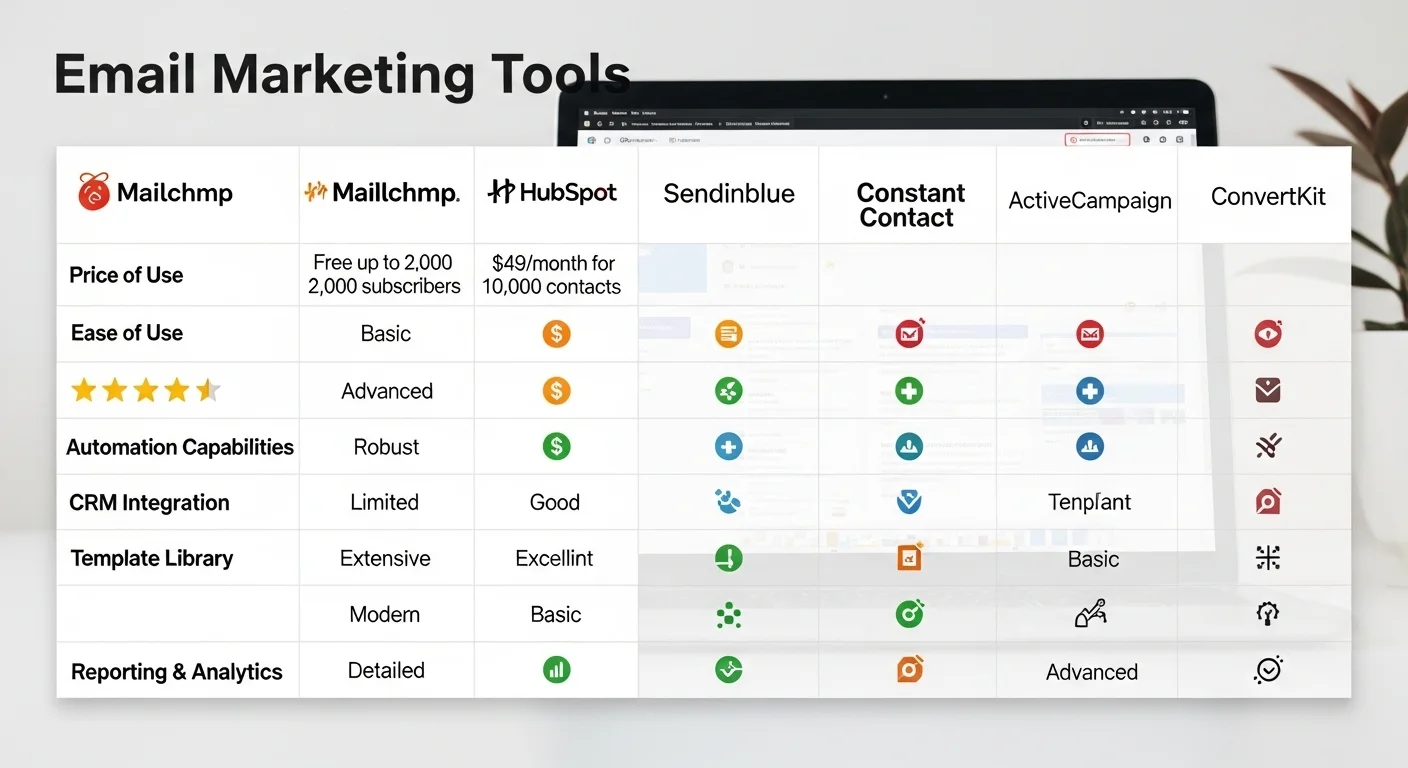
    Mailchimp: The Home Name That is becoming Complex.

    When people are starting out, they tend to use Mailchimp as the first name, and it is not in vain. The interface is minimalistic, onboarding is somewhat pain-free and the free tier was in fact very generous. However, in the last two years, they have narrowed the free plan to a great extent and their prices have been rising in a manner that is unanticipated.

    The automation builder is alright with simple sequences welcome emails, abandoned cart flows, birthday triggers. However, once you attempt to do something more complicated such as behavior-based branching automations, it begins to get clunky. Ceilings are frequently hit by power users.

    Klaviyo: The E-Commerce giant.

    When your business is an online shop, and most likely, Shopify, Klaviyo will be the most discussed tool in your industry, and in fact, the hype is mostly right. The capabilities of segmentation are outstanding. It is possible to create audiences based on purchase history, browsing behavior, anticipated lifetime value, as well as the number of times an individual has viewed a product, but not made a purchase.

    The flows of automation are complex. Establishing a post-purchase flow that divides on the basis of whether one purchased a high-quality product or a low-priced one, and then issue various review requests or upsell proposals that is truly powerful stuff that is capable of driving revenue.

    The downside? Cost. Klaviyo is costly when your list is large, and the pricing plan is developed according to active accounts, rather than the quantity of emails dispatched. You would be investing a huge amount of money in a month to a store with 20,000 or more subscribers. It depends on the level of your platform utilization to determine whether that ROI is sensible or not.

    ConvertKit (Now Kit): Creator Friendly.

    Recently ConvertKit changed its name to Kit, but it did not change much in its philosophy of the product that is a compliment. It was created to meet the needs of bloggers, course creators, newsletter writers, and independent creators that require simple yet effective tools.

    The subscriber system that is based on tags is truly dazzling. You can tag subscribers according to behavior or interest and your automations react to the tags, rather than dealing with multiple lists. It is self-intuitive, once you learn how, and does not create the clunky issue of having duplicate subscribers in multiple lists.

    The landing page editor is good, the commerce integration enables creators to sell directly via email and the visual automation builder is among the cleaner that I have used.

    What it does not have, is depth on the analytics side. You receive open rates, click rates, and conversion tracking, and to gain access to more detailed e-commerce attribution or sophisticated reporting, you will be in search of workarounds.

    Active Campaign: Tool of The Automation Obsessive.

    ActiveCampaign is the place that people come to when they have gone beyond simpler and require something with serious capabilities. Its automation builder is arguably the most powerful in the mainstream market – conditional logic, goal tracking, split testing in automations, CRM integration, lead scoring – it can deal with complexity and not collapse into pieces.

    In the case of service companies, coaches, agencies, or all companies with long sales cycles with nurture sequences, ActiveCampaign can actually become a replacement of a combined CRM and email company.

    The learning curve is a fact, though. It is not the most user-friendly interface and can be difficult to configure. However, companies that invest in learning to do it the right way, have a tendency to remain with it over the years.

    Brevo (previously Sendinblue): The Dark Horse with a low price.

    Brevo does not receive as much publicity as the rest but it is worthy of more. Email sent is used to model the pricing as opposed to the number of subscribers, which is a significant structural difference. Brevo may be much more affordable than list-based pricing sites in case you have a large list and just use it periodically through email.

    It includes email, SMS, WhatsApp and simple CRM within a single dashboard, and this puts it ahead of other companies with multichannel capabilities at an unmatched price point. The automation tools are not bad, not on the level of Klaviyo or ActiveCampaign, but good features.

    The way to literally pick.

    Quit making comparisons of features lists and begin answering more basic questions: What does your audience expect? How much is your bandwidth? What will your success in six months look like?

    Solopreneur who writes a weekly newsletter does not require Klaviyo. A Shopify shop that is growing with a revenue of $2M is unlikely to be on a basic plan of Mailchimp. Correlate the tool with the stage and strategy, not to the trending.

    Majority of the platforms have free trial. Use them. Conduct a full-fledged campaign and not a test email to yourself. Test the reporting experience, support reactions, and automation composer intelligibility to your brain.

    FAQs

    Q: What is the easiest email marketing program?
    The most user-friendly are Mailchimp or Kit (ConvertKit): both have easy-to-use interfaces and good learning materials.

    Q: Is Klaviyo worth the money?
    Yes, in the case of active e-commerce stores with a steady flow of revenue. The cost may exceed the benefits in the case of small scale or low volume stores.

    A: Which is the best free email marketing tool?
    Brevo also has a free plan, as well as Mailchimp. The free version of Brevo can send up to 300 emails per day and an unlimited number of subscribers, which is rather lenient.

    Q: Am I able to migrate to different platform in the future and still not lose data?
    Yes but must plan it. Export your tags, subscriber list and segments. History of automation does not tend to transfer.

    Q: what is the tool with the most automation?
    ActiveCampaign guides to intricate automation. Klaviyo is a leader when it comes to behavioral automation among e-commerce.


  • Web Development Tools  2026: What’s Actually Worth Your Time

    Web Development Tools 2026: What’s Actually Worth Your Time

    Web Development Tools 2026, The web developing world does not rest. Each year, there is a new crop of tools that will change the way you create, deploy and maintain web applications. Others fulfil that pledge. Most don’t. Having worked in the trenches the past few years, creating websites as small as small business, and as large as an enterprise, I have learned to separate the wheat from the chaff and concentrate on what actually moves the needle.

    This is a straight-forward, experience-based glimpse at the web development tools that will characterize 2026 – and how to approach their adoption.

    The State of Web Development Tools, as of Today.

    There was a change in something in the last two years. The tooling ecosystem was matured. We are not seeing as many revolutionary frameworks emerging every 6 months and are now consolidating around tools which are demonstrated to be valuable. Framework fatigue is getting the developers weary, and frankly, that weariness has been the good health of the industry.

    The most useful tools in 2026 will be those that unload the brain, accelerate the development of deployment cycles, and can be used in a team-based setting. That is the prism at which I would recommend you to look at all that comes thereafter.

    Frontend Development Frameworks and Frontend Development.

    React is still the most popular, but the discussion has changed. React and its ecosystem are now more inclined towards server components and the trends which Next.js led. React + Next.js 15 remains the most secure choice in the profession when you’re working on anything with complicated state management or user interfaces that are large-scale. It enjoys the widest hiring base, the most comprehensive documentation and production-tested reliability.

    Svelte and SvelteKit have penetrated seriously, however, especially with smaller teams and indie developers who value performance and developer experience. The compile-time nature of Svelte implies smaller bundles and truly quicker load times with no runtime cost. I personally used SvelteKit in a number of client projects over the last year, and the productivity gain is a reality, particularly when teams do not require the scale of the React ecosystem.

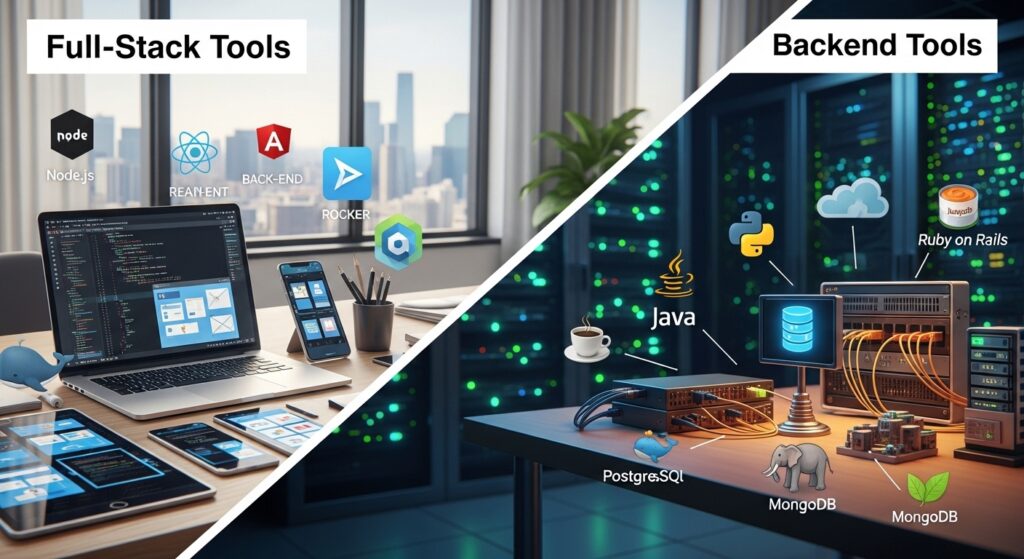
    Full-Stack Tools and Backend Tools.

    Frontend and Backend continue to blur. Some applications such as tRPC have become common to teams operating in TypeScript-intensive settings, providing end-to-end type safety without the scaffolding traditionally needed by REST APIs. Combine it with Prisma to manage your database and you are left with a backend configuration that seems ever so much more complete.

    Bun is no longer an experiment – it is a full-fledged runtime and package manager, and it is dramatically faster than Node.js on many tasks. Teams that have migrated that I have talked to tell of a time reduction in build times by 40-60 and this multiplies in CI/CD pipelines. It is not a full replacement of Node.js in all cases but in the case of greenfield projects, it should be defaulted to.

    Workflow and Environment.

    The local development arrangements have also improved greatly. VS Code remains the leader, with its extension ecosystem, but the difference between it and Cursor, which is a code editor designed to work with a developer-friendly approach, has gained a following among developers who desire a closer connection with their tooling.

    Vite has literally won the bundler battle among development servers. Its hot module replacement is so fast that it essentially alters your way of working – you can see changes practically as soon as they occur, which makes the experimentation friction less. Most modern frameworks have adopted Vite as their default build tool.

    In the case of containerization, Docker with Dev Containers has unified the local environment across teams to the extent that the problems of works on my machine are becoming a reality. When your team is not yet on Dev Containers, this is one of the most valuable changes to your workflow.

    Deployment and Infrastructure

    Vercel and Netlify continue to be the frontend and full-stack JavaScript deployment platform of choice. Their out of the box edge network performance would have cost a lot of infrastructure investment only five years ago. These platforms transparently address scaling issues, in most cases.

    Cloudflare Pages and Cloudflare Workers have expanded significantly, especially in the context of globally distributed applications, where latency is important. Their edge pricing model and performance makes them attractive to APIs requiring low-latency responses between geographic regions.

    With more complex infrastructure, Pulumi is now the preferred infrastructure-as-code tool of developers wishing to write in actual programming languages instead of domain-specific configuration languages. It works with big cloud providers and applies proper software engineering practices to infrastructure management.

    Testing Tools

    Testing has received its due. Many teams have forsaken Jest in favor of Vitest, which is quicker, complementary with Vite, and the setup is simpler. In terms of end-to-end testing, Playwright has now become the unquestionably superior choice over Cypress to use in new projects, with superior browser coverage, more dependable test execution, and a more user-friendly API.

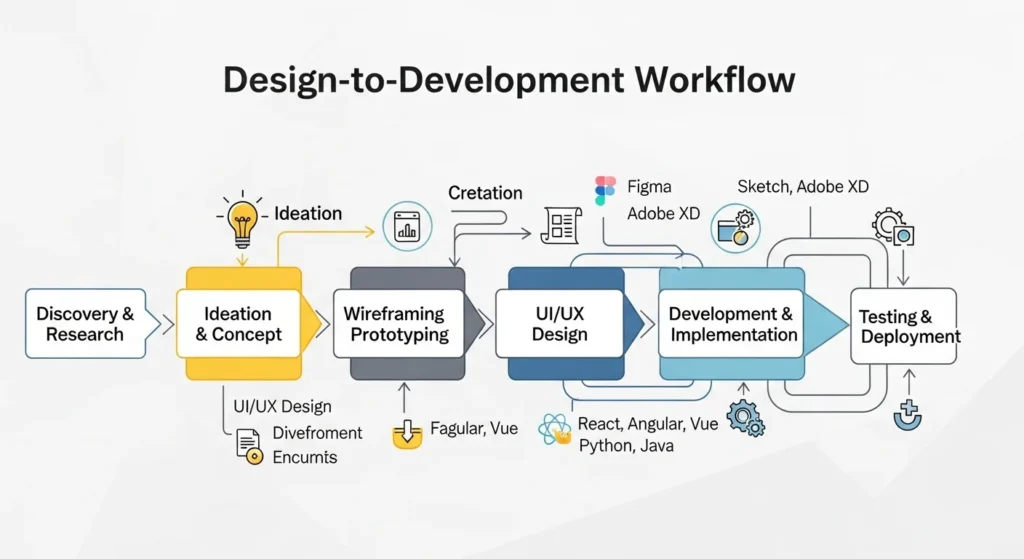
    Design-to-Development Workflow

    Figma remains the market leader in design tooling, but its Dev Mode has now fully developed such that the handoff process is truly more smooth. The fact that designers and developers can work on the same Figma file and have adequate component libraries minimizes the amount of rework.

    What Priorities to Take.

    Don’t vilely follow new tools. The developers I admire the most are not the ones on the latest stack, but the ones who have a profound knowledge of the tools they use, and make conscious decisions. Begin with good basics: an established framework, a rapid development tool, a stable deployment platform, and a test plan. Only add complexity when you have a definite problem that complexity addresses.

    Frequently Asked Questions

    Q: Will React be a worthwhile thing to learn in 2026?
    Absolutely. React is the most demanded frontend skill in the job market. The knowledge of React is a wide-open door than any other frontend technology.

    Q: Can I use Bun in place of Node.js?
    Yes, for new projects – especially when you are in a heavy TypeScript environment. It is quicker and developer experience is good. Only ensure that it is compatible with any libraries you require.

    Q: Which is the most suitable hosting platform in 2026 when having small projects?
    JavaScript based projects: Vercel or Netlify. Both have generous free plans and can be deployed in seconds out of Git.

    Q: Should we switch Vite to Webpack?
    Almost certainly. The difference in the developer experience is significant, and the majority of the frameworks are now natively supported to support it.

    Q: In 2026, is TypeScript really important?
    Very. TypeScript is now the official language of JavaScript development. Knowing it is no longer an option by career developers.

  • Best Hosting Tools Comparison: What Actually Works in 2025

    Best Hosting Tools Comparison: What Actually Works in 2025

    When you have ever had to migrate a site on a weekend due to incompetence of your hosting company, you understand just how much it is worth to select the appropriate hosting tool. I have been developing and maintaining websites since I was in high school, personal blogs, small to medium-sized shopping sites, etc. and the distinction between a pleasant experience with hosting and a nightmare is typically reduced to a few fundamental elements: speed, reliability, support and value.

    This won’t be a comparison pulled off a press release. It is founded on actual use, customer initiatives and some good trial and error.

    The reason Hosting Tools are deserving of the attention they receive.

    Majority of the people consider hosting as an extension. They select anything that comes first in a Google advert, invest one year advance payment and forget it until something goes wrong. That’s a mistake. The hosting environment has a direct impact on the load speed of your site, the security stance of your site, your ranking in search engines and finally the experience of your site.

    Google has made it very clear – Core Web Vitals are important. The slower the server, the slower the site and the lower the rankings. Therefore, the best hosting tools and platforms that you should consider at the moment are broken down.

    Cloudways – Ideal in Flexibility of Managed Cloud Hosting.

    Cloudways is in a middle ground that many developers and agency owners will be fond of: it is neither a conventional shared (host), nor a barebones cloud solution. You can select your preferred underlying cloud provider, such as DigitalOcean, Linode, Vultr, AWS, or Google Cloud and Cloudways has a nice management dashboard around them.

    The aspect that I truly like is staging environment. In the case of the client sites, the ability to push changes to a staging server, test them out and have an opportunity to deploy in a single click is a workflow game-changer. Their ThunderStack (a blend of Apache, Nginx, MySQL, PHP-FPM, Redis and Varnish) is literally speedy.

    Downsides? When you have to deal with a number of sites, the price can creep up. Hosting of email is not provided, something new users are surprised about. The support is not bad, however, at times slow during the peak times.

    SiteGround – Ideal to use when you do not have to think about it.

    SiteGround has recently reconstructed its infrastructure within the past few years, and it reveals. Instead of using cPanel, they created their own Site Tools dashboard that is easier and quicker. Even their Google Cloud-based infrastructure provides a decent speed, and the automatic daily backups I have myself used more than once.

    They have a close WordPress integration. One-click installs, automatic updates and an in-built caching plugin (SuperCacher) are also easy to use. SiteGround eliminates a lot of hassle to someone who is creating their first business web site or blog.

    This increase in price after the initial term comes as a great surprise to many, however. The rates are much higher than introductory rates of renewal – something worth considering before you make your commitments.

    Hostinger – Best Low-price, Yet not Cheap.

    Hostinger has enhanced its reputation tremendously. A couple of years back it was perceived to be a bargain-bin choice. It currently provides LiteSpeed servers, a working hPanel dashboard and performance that really punches above its price.

    Hostinger provides real value to someone who is creating a portfolio site, a business page in their locality or who is trying out a new idea. It is also competitive with their 100GB NVMe storage on their mid-tier plans and free SSL certificates, even with hosts that charge three times the price.

    Kinsta -Best with Pure Performance Obsessives

    Kinsta is constructed on the high-end network of Google Cloud Platform, and it demonstrates on benchmark tests. Kinsta is a good choice, should you be infatuated with TTFB (Time to First Byte) and wish your WordPress site to load as quickly as possible without necessarily turning into a bottleneck.

    Their MyKinsta platform is among the most cleanest hosting platforms that I have ever used. In-built detailed analytics, easy staging and APM tools. They have a support staff that truly is knowledgeable, not an entry level script reader, but the real engineers.

    It is very expensive and, similar to WP Engine, it is WordPress only. However, with performance-intensive websites, there is no alternative that is as close as possible.

    Best when: WordPress websites are performance oriented, landing pages based on SaaS, established businesses.

    What should actually be compared when engaging in a hosting tool.

    In addition to the brand names, consider the following factors:

    Uptime guarantees — Find 99.9% or better, and verify independent monitoring information, as opposed to their marketing page.
    Location of the server –A European server to a US audience will introduce latencies. Make a selection depending on the location of your users.
    Scalability – Is it possible to scale without changing it all?
    Backup schedule frequency – At least daily backups. Hourly in case your information is updated often.
    Support quality – Try out their live support. A technical question should be asked and the response should be noted.

    Final Thoughts

    No one hosting tool is the best; just the best one depending on the circumstances. The needs of a freelancer who is creating sites on behalf of the clients and a SaaS company that runs a marketing blog are different. Begin by identifying your real needs, and then align them to the services that these platforms provide.

    Given a choice of most people today, I would choose SiteGround due to the ease of use or Cloudways due to its ability to be a little more technical. Both are a great value with no loss on the basics.

    FAQs

    Q: What will be the best hosting tool in 2025?
    A: Kinsta and WP Engine are always at the top of uptime and performance (particularly WordPress websites).

    Q: Hostinger, can it be used with serious websites?
    A: Yes, to small to medium sites. It might not be suitable when it comes to high-traffic or enterprise-level.

    Q: Do hosting have any impact on SEO?
    A: Absolutely. The speed of your server, the uptime and the location will all affect your Google rankings and your Core Web Vitals.

    Q: What is the distinction between the managed and unmanaged hosting?
    A: Managed hosting is the server maintenance taken care of by you. Unmanaged is free and allows you to have complete control but involves technical expertise.

    Q: Is it easily changeable to change hosting providers?
    A: The majority of the providers provide migration tools, or even free migration services although first test on a staging environment.

  • Website Builder Tools Review: Which One Actually Works for Your Needs?

    Website Builder Tools Review: Which One Actually Works for Your Needs?

    Constructing a site previously required you to pay a developer, weeks of back and forth emails and empty your wallet before you could even have a single page up. The world like that is a far-off memory. Website builder tools have made it literally possible today to enable a freelancer, a small bakery owner or even a nonprofit coordinator to create something that appears professional in the course of a weekend- in some cases a few hours.

    However, the thing is that this is not always the case, and the incorrect option may cost you more time and money than employing that developer would have cost you. I have been testing, working with, and consulting clients on these platforms over the years and therefore I would like to unravel what really matters.

    What is a Good Website Builder?

    It would be worthwhile to know what makes a tool truly valuable before immersing oneself in the particular platforms because it may appear pretty in a video demonstration.

    My essential requirements are convenience, without compromising the flexibility, quality of templates, e-commerce options in case needed, search engine controls, speed of loading, customer support, and pricing visibility. The latter is the most important than it might seem to you – various popular builders attract you with a free plan and then put the needed features behind paywalls which are easy to add to your wallet quickly.

    Wix: The Creative’s Playground

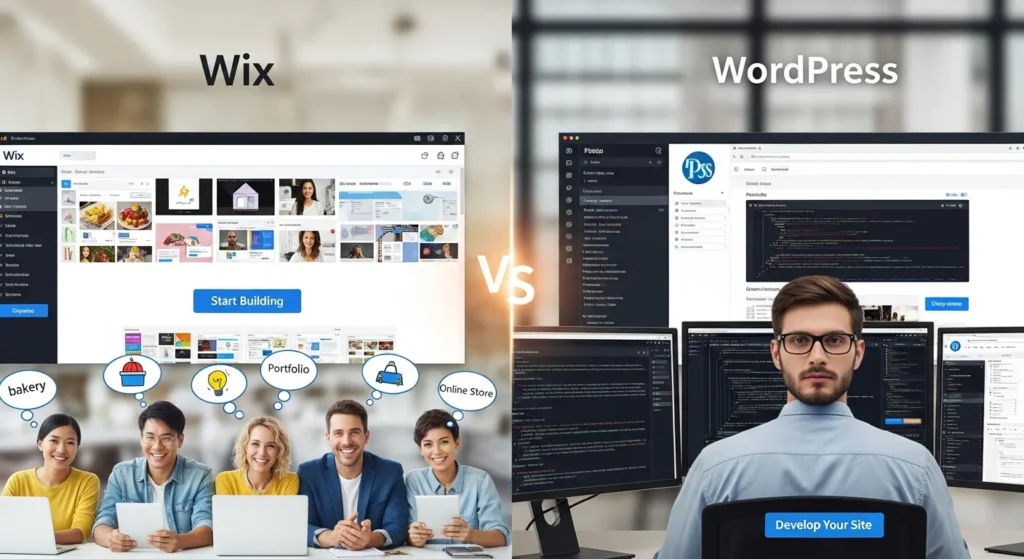
    The name Wix is likely to be the most recognizable in this category, and, frankly, it has earned its fame. Drag-and-drop editor is truly among the most user-friendly. At any point of the page you can add any element, make it as large or as small as you want, and create a design that looks just like you imagined it, without writing a line of code.

    Wix is particularly beneficial to the creative professionals. Photographers, designers, musicians and artists are likely to adore it as the freedom of visuality is unparalleled. There are more than 800 choices in categories in the template library, and most of them appear well-finished out-of-the-box.

    With that being said, Wix is limited in reality. When you select one of the templates, it is impossible to change to another one, you have to start anew, with your content not transferred. This is a weird design choice that irritates several users halfway through the project. There are also some enhancements to the SEO tools, which are much better than a few years ago, yet Wix websites still may fall behind on performance indicators when you load it with apps out of their marketplace.

    Squarespace: Style Meets Substance.

    When Wix is the virtual playground of the creative, Squarespace is the design studio of the designer. The templates at these sites are truly gorgeous and beautiful in terms of clean layouts, considerate type and visual coherence that makes amateur sites appear to have been created by an agency. It is a platform where good design choices are being forced, an asset and a drawback of this tool.

    Compared to Wix, Squarespace offers less flexibility in the form of the free form, but the structure provided is normally more attractive. In the case of service based companies, restaurants, photographers or any one who needs to appear premium without employing a brand designer, it provides.

    The included blogging and e-commerce applications are good. Not the most sophisticated on the market, but sufficient enough to sell a few dozen products or have regular content. Their analytics dashboard is un-cluttered and comprehensible even by non-technical users.

    One of the frustrations: Squarespace had previously had a great customer service. Recently it has been slower, and lots of users are resorting to community forums and not live help. There is no free plan also – only a 14 days trial.

    Shopify: E-Commerce expert.

    When you are creating a store – a brick and mortar one, with inventory control, a variety of payment gateways, shipping systems, and scalabilities – you are playing a different game with Shopify. It is not actually a web site builder. It is an e-commerce site which also allows you to create pages.

    Shopify makes its name on its backend. It is easy to manage the products, orders, returns, connect to Amazon or Instagram stores, carry out discounts, and so on. The size of the app ecosystem is huge, and this indicates that you can expand the platform to virtually do anything.

    Cost is the negative aspect. The monthly plan, transaction fees when you are not using Shopify Payments, and the apps that you are likely to require can make your own Shopify store cost you several hundred dollars a month when you are out of the startup phase.

    WordPress.com vs WordPress.org: A critical difference.

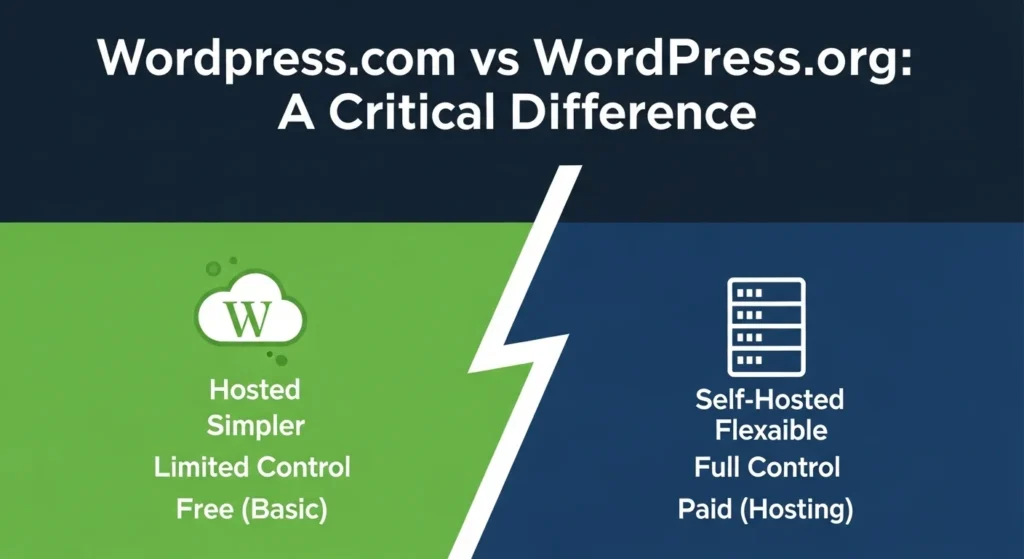
    WordPress is worth a special mention since here there are in fact two very different experiences. WordPress.com is a hosted developer – simple to begin with, restricted on the free plan, and rather restrictive on customization. WordPress.org is the open source and self-hosted version in which you download WordPress and place it on your hosting and have complete control.

    WordPress.org (combined with a host such as SiteGround or Cloudways) is highly potent to a user who desires to own his or her site completely, have access to custom components, and no limitations imposed by the platform. It is the platform that operates about 43% of the whole internet, after all. However, the learning curve is more acute, and you are to update, back up and secure.

    The Honest Verdict

    No one best web building site. The only thing that is important is to align the tool with your real objectives.

    In need of something pretty and quick? Squarespace. Looking to have complete design freedom and little learning curve? Wix. Running a store? Shopify. Thinking long-term and big, with everything in control? Self-hosted WordPress.

    It is an easy way to fall into the trap and select a platform because someone on YouTube showed that it is easy. There are no smooth edges of any platform. The one which you can live with is the right one, the one whose edges are rough.

    FAQs

    Q Which is the easiest website builder?
    The easiest to use is typically Wix because of its drag-and-drop editor and versatile templates.

    Q: Is it possible to create a free web site?
    Yes, there is a free option at Wix, but it has branding of the platform and restricted options. To achieve professional results, a paid plan would be suggested.

    Q: Is Shopify easy to use?
    Shopify is simple to use by e-commerce novices, but is excessive when not selling products.

    Q: What is the most appropriate builder when it comes to SEO?
    The most control of SEO is offered by WordPress.org. Wix and Squarespace have been enhanced but still have their limitations.

    Q: Are these platforms coded?
    No. Each of the platforms listed here are user friendly to non-coders, although understanding of basic HTML/CSS is useful in customizing them.