You might have already invested a few hours in the real world of building WordPress sites, be it on behalf of a client or your own business or even on a personal project and realised that the ecosystem of the plugins is both a superpower and a minefield. The official WordPress repository alone has over 59,000 plugins and this does not include the premiums offered by marketplaces such as CodeCanyon or by individual developers. The very amount is amazing.
I have been creating and supporting WordPress sites more than 10 years. In the process, I must have installed and uninstalled hundreds of plugins. Others have been paradigm-shifts. There have been others who have ruined live websites at the most inappropriate time. Below is my personal, experience-based overview of some of the most popular WordPress tools, what they do on the job, and what they do not, and their worthiness to the install.
Why Choice in Plugin is More Than Meets the Eye.

The majority of novices think of the plugins as applications (install, uninstall when you get tired of it). But plugins communicate with your WordPress core, your theme and even with each other. A malfunctioningly coded plugin may bring your site to a crawl, present security risks or be incompatible with other tools in a way that is truly painful to debug.
Plugin bloat is a fact. One client site that I inherited had 47 active plugins. The loading time was more than 12 s. We reduced it to 19 critical, properly-kept plugins and it brought the site to less than 2.5 seconds. The moral: quality and compatibility is better than quantity, every time.
Rank Math – Recommended.
In the past couple of years, Rank Math has taken the place of Yoast in most of my projects, becoming my preferred SEO plug-in. The free one is truly a powerful one, as you have schema markup, a connection with Google Search Console, the ability to track key words of various posts (Yoast provides only one key word in the free version), and a neat and user-friendly interface within the block editor.
What I especially enjoy is that it doesn’t need you to be an expert programmer to conduct technical SEO. Establishing canonical URLs, redirects, breadcrumbs, etc. – do all that without writing a line of code.
Where it leaves much to be desired: The onboarding wizard, although very useful to new users, occasionally sets up options that require sophisticated users to revert to and adjust their settings right away. And as any good powerful plugin, there exists a learning curve.
Yoast SEO – Still Good, but Getting Old.
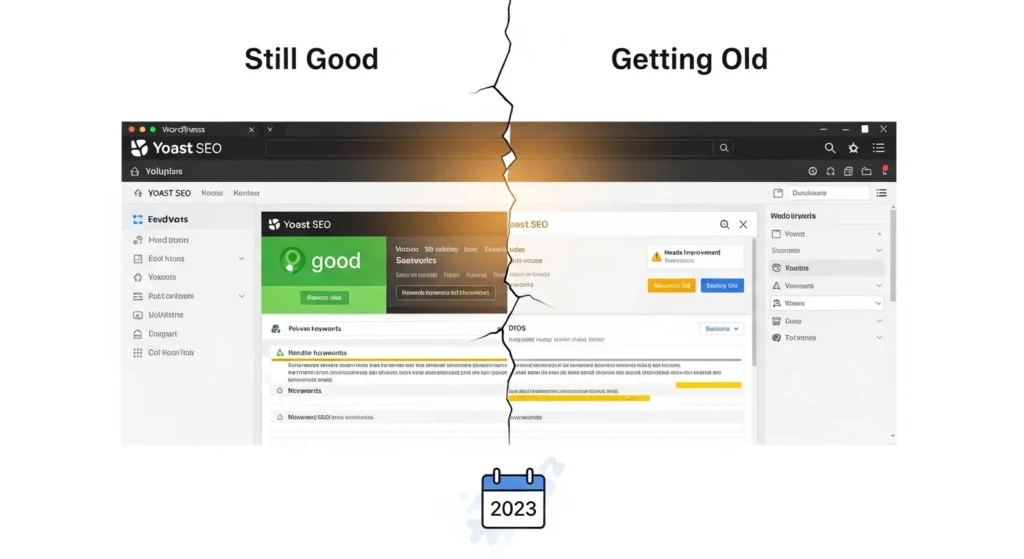
Yoast can be credited with training a generation of bloggers on the best-practices of SEO. The readability analysis is also actually beneficial and the brand recognition makes clients tend to request it specifically. However, the free version is getting less and less versatile than Rank Math, and the cost of the premium has risen.
Elementor – Mighty, but Wary.
Elementor has revolutionized the process of building websites by non-developers, and this is no hyperbole. I have also utilized it in client websites where the client had to deal with the content themselves and the drag-and-drop interface is a real enabler to those who otherwise would have become totally confused with the block editor.
And that being said, Elementor increases the size of your pages by a good margin. In case performance is a priority (and it must be in this case, following the changes made by Google Core Web Vitals) you will have to invest time in optimization. Elementor has also had a history of security weaknesses, but typically their team has been receptive to patrolling the weaknesses.
WP Rocket — It was Worth the Money.

WP Rocket is a high-quality caching plugin, and the genuinely best investment you can make with a plugin. It can significantly reduce page load times, with a little configuration, out of the box. Such capabilities as lazy loading, database optimization, CDN integration, and cache preloading are all managed in a clean way.
Unlike other caching plugins that may require you to have knowledge of server architecture so that you can set them up correctly, the WP Rocket works on most websites nearly right after it is turned on. In the case of agency owners who have to deal with a number of client sites, the savings in time are worth the price.
W3 Total Cache Free, Ugh, but Complicated.
W3 Total Cache is free and has the potential, but it can be easily configured in a way that it is virtually a rite of passage to WordPress developers. When done properly, it provides great performance. Misused, it results in weird caching problems that are difficult to debug.
Wordfence is the Industry Standard.
I install Wordfence on almost all the sites that I construct. The free version will have a web application firewall, malware scanning, login security features and real-time traffic monitoring. The threat intelligence feed (a little bit more delayed in the free version as compared to the premium variant) is actually helpful in getting to know what attacks are underway.
One candid mention: Wordfence may consume a lot of resources with a shared hosting. When on a budget shared plan, you may experience some slowdown when scanning cycles take place. Making scans during off-peak hours is useful.
WPForms The Friendliest.
WPForms is difficult to contend with regarding usability in the majority of sites that require contact forms, lead capture or simple surveys. The drag-and-drop form builder is truly user-friendly, and the free version (Lite) manages simple forms of contacts without any problems.
Gravity Forms is still the choice when more complex, enterprise-level form requirements are required – multi-page forms with conditional logic, strong integrations with CRM and custom development hooks.
Conclusion: Construct a Lean, Meaningful Plugin Stack.
The optimal WordPress configuration is not the one with the highest number of plugins installed in it, but rather one on which each and every single single-purpose has its right to be. Prior to installation, question: does this address a particular issue, is it under active maintenance, a history of security accountability?
Review the last updated date in the repository, browser through reviews with red flags and test the plugins in a staging environment before deploying to production.
FAQs
What is too many WordPress plugins?
No magic number but it is quality rather than quantity. Pay attention to the well-maintained and efficient plugins instead of restricting yourself to a specific number.
Are WordPress free plugins safe?
A large number is, however, it is always necessary to verify the last update date, installed programs, and user reviews before installing any of the plugins on the production site.
Does WordPress get slow with the use of plugins?
Yes, poorly coded or excessive plugins. Properly configured well-built plugins can have little to no performance impact.
Leave a Reply