best free online tools review, Time to tell the truth, the internet is flooded with lists of the best tools, most of which are either old, sponsored to death, or authored by an individual who has obviously never used a half of the tools he/she is proposing. Over the years I have been in the content creation, project management, design and research sectors and I have also developed a rather good mental library of what really works and what just sounds good on a blog post.
This is my personal review of the best free online tools these days – things that I have used, tried and in most instances trusted in my career.
The reason why Free Tools are Important.
Free tools have an odd stigma. When something is free, people think that it has to be restricted or not. However, that is not necessarily the case. These are some of the strongest weapons that are available on the internet, and some of them are absolutely free or have free versions that are not gutted down to a demo version that will aggravate you to buy.
Canva (Free Tier) The Design Degree-Free Designer.
Canva is not new, so it almost goes without saying that it should be recommended. However, there is a reason why it continues to take its place: the free version is, in fact, strong.
You have access to thousands of templates, a drag-and-drop interface, basic image editing and presentation tools, which actually look as good as PowerPoint. I have created pitch decks, social media graphics, infographics, and even basic logos using it, since the client did not have the funds to hire a designer.
Google Docs / Sheets / Slides -Still The best when it comes to Collaboration.
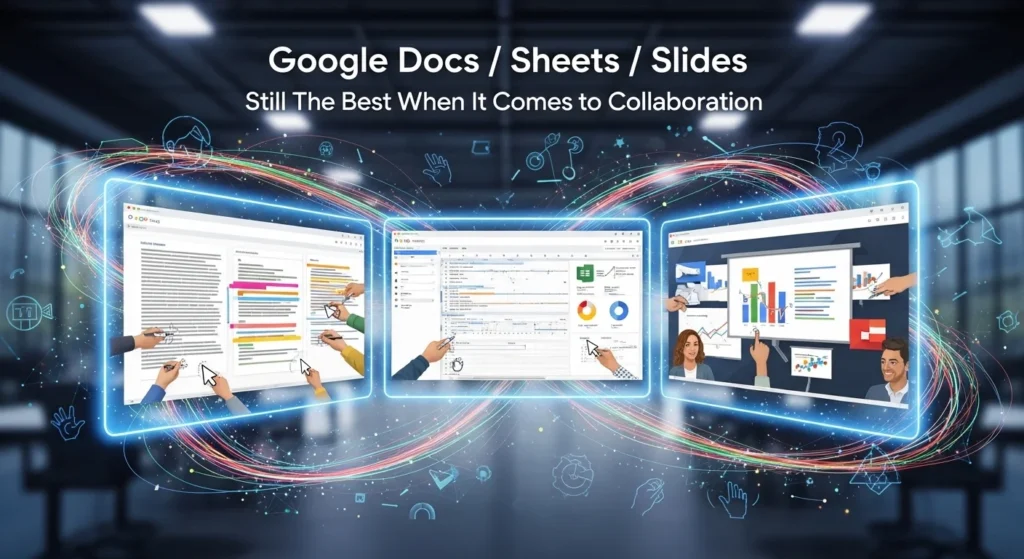
I hear, I hear– everybody knows about Google Docs. Nevertheless, individuals always undervalue the strength of the free Google Workspace suite in the actual work.
With only Google Sheets, I have organized editorial calendars in 15+ person teams. I have written, edited and submitted complete manuscripts using Google Docs. Its ability to facilitate real-time collaboration, comment threading, version history, and cross-device accessibility make it one of the most practical free productivity tools ever.
Hidden secret: Google Sheets contains features which can compete with simple data analysis solutions. Once you have mastered at least some formulae – VLOOKUP, IMPORTRANGE, QUERY – you can accomplish truly powerful things without even having to open Excel or spend money on data applications.
Idea (Free Plan) The Organizational Tool That Will Stick.
Notion is known to be either life changing or crippling, depending on the person you consult. After the initial two weeks, I was in the first camp.
The free version comes with a single workspace that has unlimited pages and blocks and is sufficient to use personally and even in small team projects. My uses include research notes, content planning, reading lists, and client briefs. It is flexible like no other – create databases, wikis, task boards or simple notes all with a single tool.
Honesty: The first installation is not easy. You will not love Notion unless you are prepared to take a few hours to create a system to suit you. But then it really comes in handy.
Grammarly (Free Version) — Not a Writing Replacement, Better Than Spellcheck.
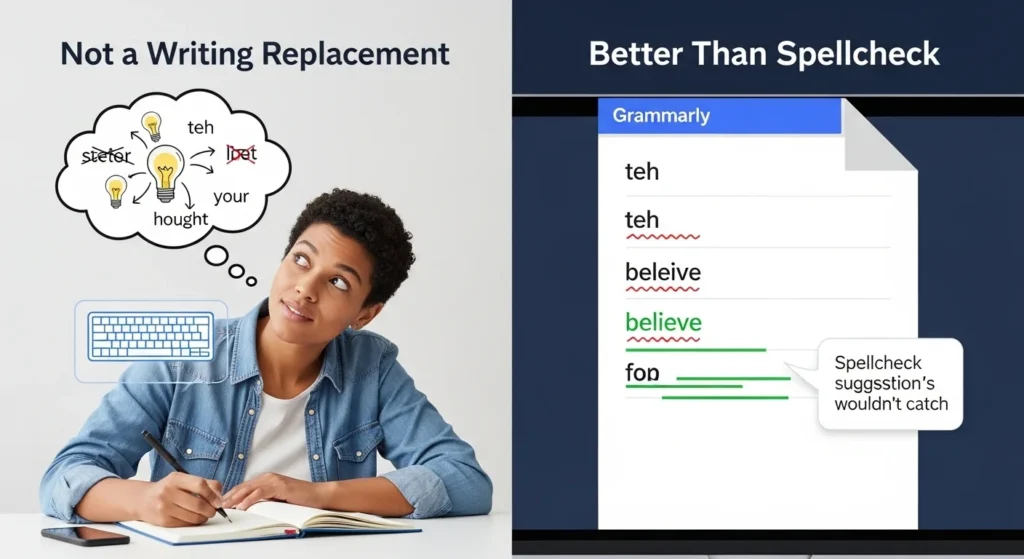
The free version provides Grammarly with grammar errors, phrases that are easier to understand, and words that are overused. It is a sanity check that is fast to everyone who need to write emails, proposals, reports or blog content, which will save embarrassment.
Where I would go further back: It is overused by some writers who, as a result, come up with sanitized prose. It is a safety net and not a writing coach. It is not about defining your style, but to catch errors.
Trello ( Free Plan) – Visual Project Management, Without the Overwhelm.
Trello has free Kanban boards that are extremely good in case you are only handling a small number of tasks or you are handling your personal work. It includes unlimited cards, 10 boards per workspace and simple automation.
I have been working with Trello to facilitate editorial pipelines, client onboarding checklists, and product launches. The drag-and-drop interface is visual and easy to use that even non-technical members of the team can use it instantly – and this is more important than people might think.
Hemingway Editor – To When Your Writing is too thick.
This is one that does not receive due credit. Copy any text into Hemingway Editor and it will point out sentences that are excessively complicated, those in the passive voice, the use of adverbs, and the grade level of the readability level- free and in your browser.
It is particularly practical when the content is oriented to the general audiences. I have it run on long articles before publication to weed out technically sound sentences that are practically tiresome to read.
Unsplash and Pexels – Free Stock Photography That Doesn’t look like Stock Photography.
Poor quality of stock photos may decrease otherwise great content. Both Unsplash and Pexels provide quality, royalty-free pictures that even appear natural. In most cases, no attribution is necessary, absolutely free.
Final Thoughts
The most effective free online tools have a few common characteristics: they address an actual issue, they are kept in a good state to remain reliable and do not use their free options to attack users. The ones that I have listed below pass all three tests.
It does not matter to gather tools, but to use a few of them in your day-to-day practice. The majority of individuals will require a writing tool, a visual tool, an organization tool, and a communication tool. A very powerful online work environment can be constructed at no cost.
FAQs
Q: Can I use free online tools in the course of professional work?
A: Yes, in most cases, the tools of such popular companies as Google, Notion, and Canva. Privacy policy should always be reviewed in case you are dealing with sensitive client information.
Q: Are paid software substitutes possible with free ones?
A: Definitely on a variety of tasks. In recent years, the differences between the free and paid have been reduced.
Q: What is the most user friendly free tool?
One: Google Docs to write, Canva to design – both have close to zero learning curve.
Q: Can free tools be associated with any hidden costs?
A: There are feature limits to push you to paid plans. The free versions of the tools mentioned below are in fact useful and not pushy with upselling.
Q: Which is the frequency of updating the tools I use?
A: Revise your toolkit after every half year. Tools are subject to change, and superior alternatives to existing tools are discovered on a regular basis.
Leave a Reply